
.png)
 3 months ago
23
3 months ago
23
ARTICLE AD BOX
Israeli airstrikes on the central Iranian city of Isfahan have caused significant damage to some of the country’s most treasured cultural landmarks, Iran’s Ministry of Culture and Heritage has said.
Photos and video released by the ministry show parts of the 17th‑century Ali Qapu Palace and the nearby Chehel Sotoun palace and garden suffering serious harm after strikes on Monday. A powerful blast wave also reportedly dislodged turquoise tiles from the historic Jameh Mosque, sending fragments crashing to the ground.
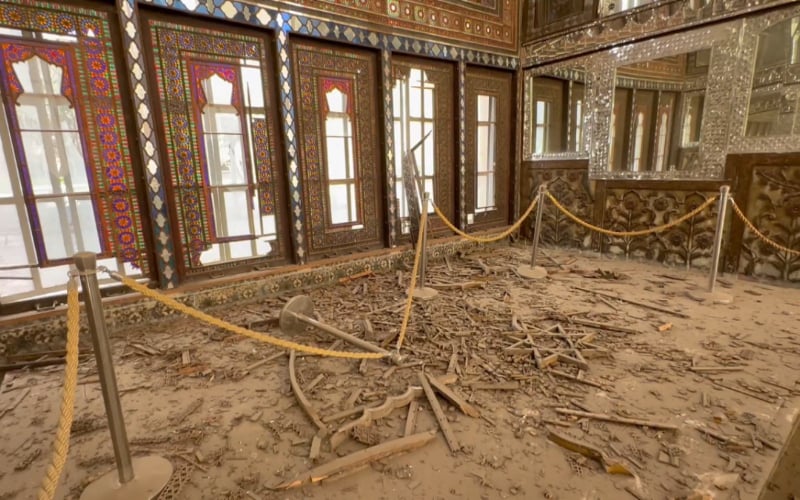 Golestan Palace hit by U.s-Israeli strikes photo: @Iran_GOV on X
The sprawling complex of Naqsh‑e Jahan Square a 16th‑century Safavid‑era site surrounding the damaged mosques and palaces also appears to have been affected by shockwaves. The square is a UNESCO World Heritage site and is widely regarded as one of Iran’s most significant architectural ensembles.
Iranian officials said the strikes were targeting a governor’s building near the square, but many of the city’s cultural treasures sit in close proximity. The Israeli military has said it did not deliberately target cultural sites, but has not addressed how damage occurred to protected buildings.
The Ministry of Culture and Heritage said blue flags had been placed at listed cultural sites as per international wartime protocols to signal their protected status, but that this had made no difference to the impact of the strikes.
The attacks in Isfahan follow another strike last week in Tehran, in which the Golestan Palace, a 14th‑century royal complex and UNESCO World Heritage site was badly damaged, according to ministry images. The palace’s famed hall of mirrors was shattered and its gardens littered with debris.
On Sunday, imagery shared by Iranian officials showed serious damage to Falak‑ol‑Aflak Castle, an ancient Sasanian hilltop fortress in Lorestan Province, after what the ministry described as an Israeli airstrike on cultural ministry offices in the region. Two local museums were also reported damaged.
In a statement, UNESCO said it had verified destruction at a number of World Heritage sites in Iran, including Golestan Palace, Chehel Sotoun, and the Jameh Mosque of Isfahan, as well as damage to areas near the prehistoric Khorramabad Valley sites.
The agency said cultural property is protected under international law and that it had shared precise coordinates of listed sites with parties to the conflict in hopes they would be avoided.
“These sites carry historical memory that transcend ideology,” said Naghmeh Sohrabi, director of research at the Crown Center for Middle East Studies at Brandeis University. “They are living breathing monuments to beauty and creation, not just for Iranians but for all of us in the world.”
The apparent destruction has sparked outrage in Iran, with many citizens saying the strikes have gone beyond military targets and are damaging symbols of national identity.
“What happened to their claims that this was war on the regime and not on Iran and its people?” said a resident of Tehran, reflecting a sense of anger and disbelief among many.
Iran’s Red Crescent Society said nearly 10,000 civilian structures have been damaged or destroyed since the conflict began on 28 February, including thousands of homes, schools and medical facilities. Among cultural losses, officials now count at least six major heritage sites.
The governor of Isfahan described the assault on his city as “barbaric”, saying advanced weaponry was being used against some of the world’s oldest symbols of civilisation.





 English (US) ·