
.png)
 2 months ago
36
2 months ago
36
ARTICLE AD BOX
THEY came, they talked and they left, only to return within a day. That was true of the Iranians but not the Americans who were to fly in from DC but last-minute changes to their plans meant they never got on the plane. Some of them were said to be holed up in Islamabad’s Serena Hotel but there was little information available about them. Perhaps, even in this age of musbat (positive) reporting, one can say that the stalemate continues, though those in the know insist there is slow and steady progress behind the scenes. They have been reporting this positively for weeks now so the rest of us muggles can only hope for the best and point out that the ceasefire is still in place. But none of us can forget that the Strait of Hormuz is still closed and blockaded, supply lines are disrupted and the lack of trust can cause an accident, which may lead to a resumption of hostilities. But in the meantime, all the roads still lead to Pakistan.
The Iranians returned here twice over the weekend, while the Americans, too, were nearly here again. Neither one of the two warring countries nor the others waiting for the conflict to end can stop praising Pakistan. Indeed, be it local television or social media — domestic and international alike — every platform is full of Pakistan, its geopolitical role and relevance. There are stories galore and multiple WhatsApp forwards on how Pakistan and its field marshal gained President Donald Trump’s attention and approval as well as Iran’s trust. And ‘middle power’ is now used in sentences about Pakistan as frequently as ‘off-ramp’ was last year during the May hostilities in South Asia. Indeed, Pakistan is the new middle power on the world stage, no longer dysfunctional and no longer isolated.
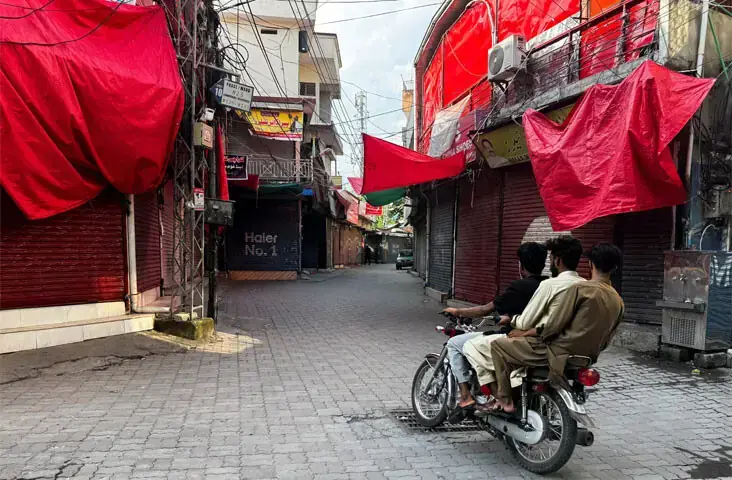
But in the excitement of being the new kid on the geopolitical block, most Pakistanis, along with foreign commentators, have forgotten that this is a neighbourhood we are very familiar with. The country has circled this block time and again. Occasionally with civilians in charge but mostly with military dictators ruling the roost, Pakistan has punched above its weight — compared to its size and economy — at many key moments of (Western) history. Post-9/11, Gen Pervez Musharraf was feted around the world, especially in Washington. That is why, inside the country, there is some wariness about the excitement surrounding this moment of international glory. It is not just because of history but also living experience. In the past few days, Islamabad went through a crippling lockdown where commuting was a hassle; people without personal vehicles had to pay heavy fares to get to work, and perishables became expensive as supplies were disrupted. In addition, educational institutes were shut in places and working people were thrown out of hostels, even if they didn’t have leave. The daily-wage earner’s plight is unimaginable. This continued for a week with no information about when it would end — because the Iranians and Americans wanted to figure out if they wanted to talk and this allowed the government to bask in the glory of being an emerging power, or a middle power or just relevant, paying no heed to the citizens’ discomfort.
It is becoming harder to think of ourselves as ‘citizens’ because somehow the word is associated with rights that the state seems to be stripping us of, one constitutional amendment at a time. Consider that a journalist was picked up under Peca as we hosted the Iranians; he was presented in court in handcuffs — not the first one and definitely not the last — while the government feted visiting journalists with a fancy dinner. Channels celebrated an article on social media about ‘Pakistanis’ as many absorbed the news of another hike in petrol prices, while navigating longer commutes due to roadblocks. Iran and the US were discussed endlessly, while the destruction of katchi abadis was ignored by most of the media, which couldn’t stop waxing lyrical about the feel-good moment and playing patriotic songs. This was just what Islamabad endured.
There’s some wariness about the excitement surrounding this moment of international glory.
There is a point here. While it’s not unusual for Pakistan’s elevation on the world stage to be directly linked to the confidence rulers feel in ignoring human rights at home, the present disregard for people’s opinion and welfare continues to hit new highs. I say this despite constantly being told that the present is no different from the recent or distant past — as if normalising violence against the people is a better argument than trying to deny it. But more than that, it is also the disregard for the economic challenges Pakistan faces, which have been ignored in all this excitement about the country’s foreign policy successes. Previously, such relevance has brought rents. Undoubtedly, part of the exhilaration even now stems from this expectation of geostrategic manna, which so far remains as vague as the idea of peace between Iran and the US.
It could be easier IMF terms, or rents in exchange for providing security to the Gulf states, or perhaps a role in the reconstruction that will take place in the region. But other than the fact that none of this is more than a vague promise, there are additional concerns. Geostrategic rents bring much pain once they end and leave the country weakened if the fundamentals are not fixed. From the time of Gen Zia, where he could negotiate an aid package by calling the first offer peanuts, to Musharraf’s era when we had to choose quickly between being with the US or against it, to the present where the country is so needy that it settles for mere promises. By now, easier IMF conditionalities or the idea of Saudi investment is success.
Unfortunately, instead of understanding this core point, we are once again chasing the notion of these rents for temporary relief just as would an addict. For cure takes time while the fix can be easier and immediate. And the fix, it seems, is in for the moment. For the rulers.
The writer is a journalist.
Published in Dawn, April 28th, 2026





 English (US) ·