
.png)
 12 hours ago
7
12 hours ago
7
ARTICLE AD BOX
TEHRAN: The US-Iran conflict entered a new and dangerous phase on Tuesday as Washington launched fresh strikes on Tehran, sending tensions across the Middle East soaring even as President Donald Trump insisted a diplomatic deal remained possible.
Trump warned that the US would carry out further attacks, telling conservative radio host Hugh Hewitt on Monday that Washington planned to strike Iran “very hard” as hostilities continued to escalate.
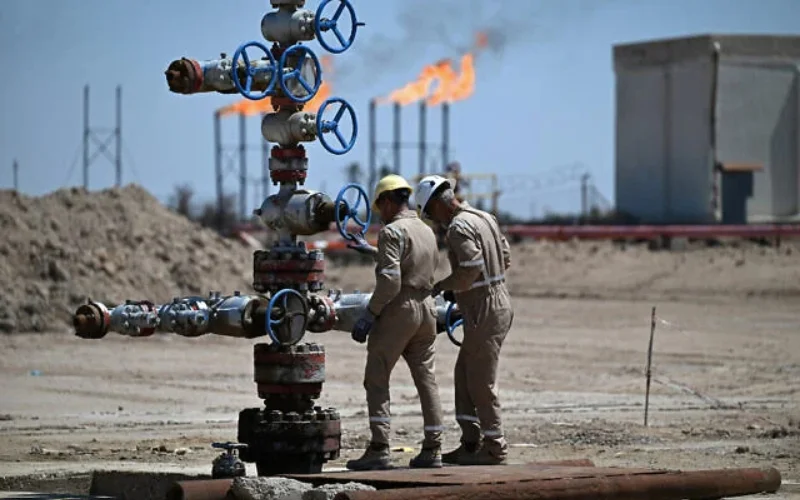
The renewed conflict pushed global oil prices higher, with crude markets rising more than 9% amid growing concerns over regional instability and possible disruptions to energy supplies through the Strait of Hormuz.
The US Central Command (CENTCOM) confirmed that American forces began a new round of strikes against Iran at 8:45pm GMT on Monday, marking the third consecutive night of military operations.
CENTCOM said the attacks were aimed at weakening Iranian military capabilities and reducing threats against civilians and commercial shipping in the Strait of Hormuz.
“These strikes will continue imposing a heavy cost on Iranian forces and degrade their ability to attack innocent civilians and commercial shipping,” CENTCOM said in a statement.
The latest escalation came after the United Arab Emirates (UAE) reported that two commercial vessels were targeted by Iranian cruise missiles while passing through the Strait of Hormuz.
The UAE Ministry of Defence said the tankers Mombasa and Al Bahiyah were struck in the southern shipping lane of the strategic waterway, within Omani territorial waters.
The attack killed one crew member and injured eight others.
The UAE, a key US ally in the Gulf region, has previously reported several missile and drone attacks linked to Iran.
Read More: Trump declares US as ‘guardian’ of Strait of Hormuz
Meanwhile, Iran’s Islamic Revolutionary Guard Corps (IRGC) announced new strikes against Bahrain, Jordan, Kuwait, and Oman, according to Iranian state media.
The White House confirmed that President Trump formally notified Congress last week about the resumption of US military operations against Iran, allowing the Pentagon to continue activities in the region for 60 days without additional congressional approval.
Trump also threatened to target Pickaxe Mountain, a deeply buried nuclear site near Natanz that Western intelligence agencies suspect could be linked to Iran’s nuclear programme.
Following Trump’s orders, CENTCOM announced that a blockade on Iranian ports would be reinstated.
Trump said the United States would be known as the “guardian of the Strait of Hormuz” and proposed imposing a 20% fee on cargo shipments passing through the strategic waterway.
He added that other countries would continue to have open access to the Strait.
Iranian Foreign Minister Abbas Araghchi criticised Trump’s proposal, saying that any compensation related to safe passage through the Strait should be determined differently.
In a statement on social media platform X, Araghchi said a 20% charge was excessive.
The United States has repeatedly opposed any attempt by Iran to impose fees on shipping through the Strait of Hormuz, arguing that international law does not allow such restrictions.
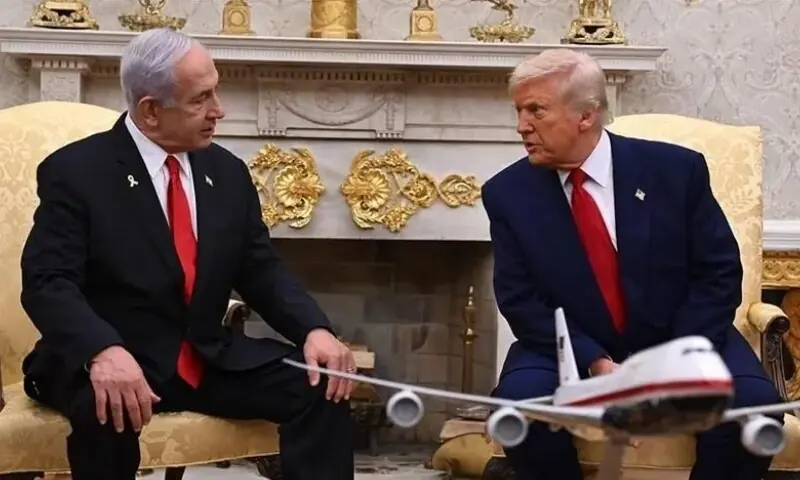
Despite the escalating military confrontation, Trump said negotiations with Tehran could still lead to a possible agreement.
“Yes, I think a deal is possible,” Trump told reporters at the White House, claiming that both sides had previously reached an understanding before Iran requested further negotiations.
Iranian Foreign Ministry spokesman Esmaeil Baqaei said the June memorandum of understanding that formed the basis for talks and temporarily reduced tensions was now “in crisis.”
However, he said Tehran continued discussions with mediators from Qatar, Pakistan, and Oman to prevent further escalation.
Analyst Bader Al-Saif, an associate fellow at Chatham House, said the renewed military action was unlikely to resolve the dispute permanently.
“Both sides want to end the impasse on their own terms, and they are increasingly finding it difficult to do so,” Al-Saif said.
Iranian state media reported casualties following the latest US strikes, which targeted areas across southern and western Iran.
Several explosions were reported near Bandar Abbas, a major port city located close to the Strait of Hormuz.
According to an AFP tally based on Iranian announcements, at least 25 people have been killed in Iran since hostilities resumed on Wednesday.
Iran’s Revolutionary Guard claimed it had targeted US military facilities and bases in Jordan, Bahrain, and Kuwait.
Iran has maintained that it only targets US interests in the Gulf region, but Iranian military officials warned that any cooperation between Gulf countries and Washington could be considered an “act of war.”





 English (US) ·