
.png)
 1 hour ago
4
1 hour ago
4
ARTICLE AD BOX
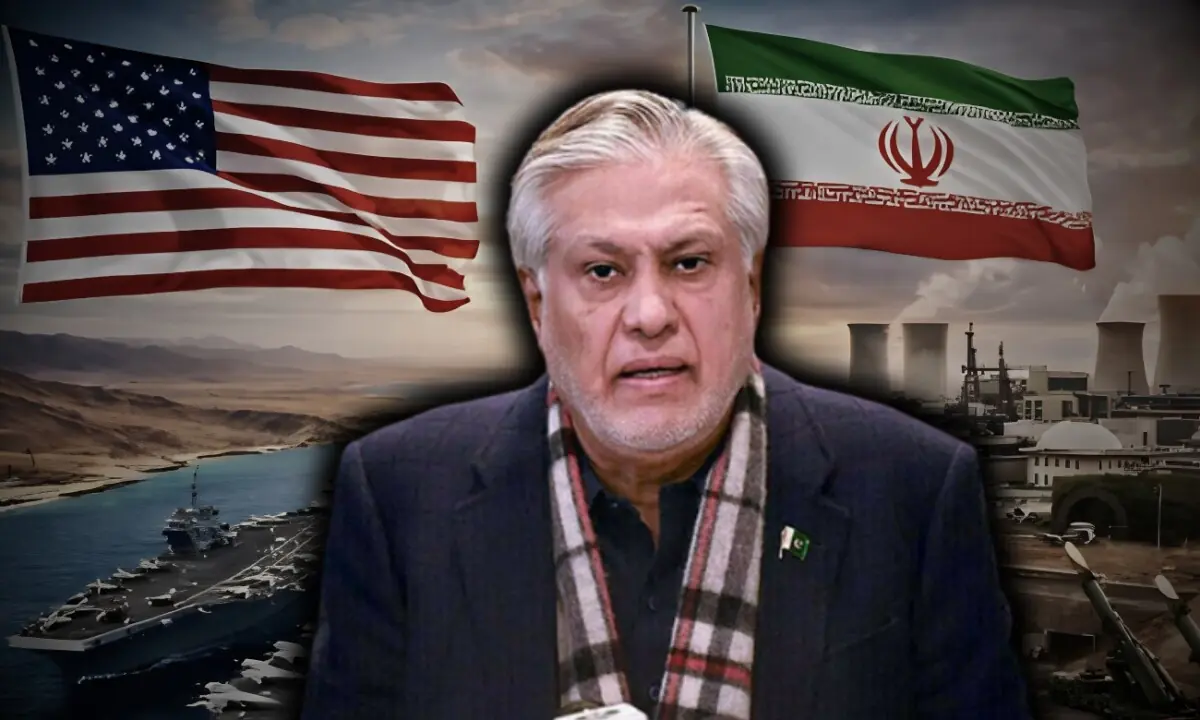
WASHINGTON / TEHRAN: The United States and Iran engaged in a brief but intense exchange of fire on Thursday marking the most serious challenge yet to the fragile ceasefire that has been in place for over a month.
Despite the confrontation both sides later signalled that they do not intend to allow the situation to spiral into wider conflict.
According to Iranian military sources US forces targeted two vessels entering the strategically vital Strait of Hormuz and also conducted strikes within Iranian territory. The United States military however maintained that its actions were purely retaliatory, responding to earlier Iranian attacks in the region.
US President Donald Trump attempted to defuse tensions, asserting that the ceasefire remained operational. In comments cited by an ABC journalist, he described the incident as “just a love tap,” downplaying its strategic significance.
President Trump told ABC News’ Rachel Scott during a phone call Thursday that retaliatory strikes against Iranian targets are just a “love tap.”
Live updates: https://t.co/SckPdjIMgM
— ABC News (@ABC) May 7, 2026
Iranian state media subsequently reported that normal conditions had been restored after several hours of intermittent exchanges near the maritime chokepoint.
The latest escalation unfolded while Washington awaited Tehran’s response to a proposed framework aimed at formally concluding the conflict. However, major sticking points remain unresolved, particularly Iran’s nuclear programme and broader regional security concerns.
Since the ceasefire came into effect on April 7, both countries have intermittently traded fire reflecting the continued volatility of the situation.
President Trump posts on TruthSocial: Three World Class American Destroyers just transited, very successfully, out of the Strait of Hormuz, under fire. There was no damage done to the three Destroyers, but great damage done to the Iranian attackers.
They were completely… pic.twitter.com/HzxCey8tHh
— Donald J Trump Posts TruthSocial (@TruthTrumpPost) May 7, 2026
Iran’s Joint Military Command accused the United States of violating the ceasefire by striking an Iranian oil tanker and another commercial vessel, as well as carrying out air operations targeting civilian areas on Qeshm Island in the Strait of Hormuz, alongside coastal regions including Bandar Khamir and Sirik.
In retaliation Iranian forces claimed they launched attacks against US naval assets positioned east of the Strait of Hormuz and south of Chabahar port.
A spokesperson for Iran’s Khatam al-Anbiya Central Headquarters asserted that the retaliatory strikes inflicted “significant damage.” However, the US Central Command (CENTCOM) firmly rejected these claims, stating that none of its military assets were hit.
CENTCOM further explained that Iran had employed missiles, drones, and small boats in an attack targeting three US Navy destroyers. In response, American forces struck missile launch facilities, drone infrastructure, and related operational sites.
“CENTCOM does not seek escalation, but remains fully prepared to defend American forces,” the statement added.
— U.S. Central Command (@CENTCOM) May 7, 2026
Iranian state broadcaster Press TV later reported that stability had returned to Iranian islands and coastal cities along the Strait of Hormuz following the hours-long exchange.
This was not an isolated incident. Earlier in the week, on Monday, US forces said they destroyed six Iranian small boats and intercepted multiple cruise missiles and drones, which they described as part of an Iranian attempt to disrupt maritime traffic through the strategic waterway.
Before the latest confrontation, Washington had introduced a proposal aimed at formally ending hostilities. However, the framework reportedly leaves several critical issues unresolved, including US demands for Iran to suspend its nuclear activities and fully reopen the Strait of Hormuz a maritime artery that previously handled nearly one-fifth of global oil and gas flows.
Tehran has indicated that it has not yet taken a final decision on the proposal.
In a separate development, the United States imposed sanctions on Iraq’s deputy oil minister and three militia leaders, accusing them of supporting Iranian interests.
Meanwhile, regional tensions further escalated after Israel confirmed an airstrike in Beirut that killed a Hezbollah commander a day earlier the first such strike on the Lebanese capital since a ceasefire agreement was reached last month.
Iran has made the cessation of Israeli military operations in Lebanon one of its key demands in ongoing diplomatic discussions with Washington, highlighting the interconnected nature of the broader regional crisis.



 English (US) ·