
.png)
 6 hours ago
5
6 hours ago
5
ARTICLE AD BOX
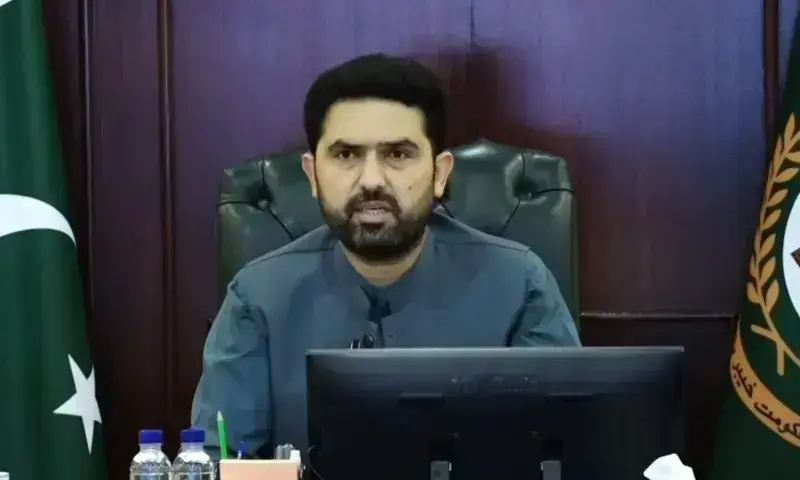
Minister of State for Interior Tallal Chaudhry on Wednesday criticised laws enacted by Khyber Pakhtunkhwa expanding MPAs’ powers and immunities, taunting the PTI over its former pledges to end “VIP culture”.
The KP Assembly passed three acts on April 30, which pertained to immunities and privileges of MPAs, the speaker and the deputy speaker, as well as salaries and allowances of lawmakers.
Although KP Governor Faisal Karim Kundi assented to the laws on May 6, the legislation has remained under wraps. The Acts and the gazette notifications have yet to be uploaded to the KP Assembly website.
Commenting on the new laws, Chaudhry criticised the PTI for providing major privileges to KP members despite making promises to end “VIP culture”.
He noted that the party had claimed that under its leadership, assembly members would live as common people.
“Do common people receive the conveniences of free travel, free arms licences, free stays at rest houses, blackout windows [and] special number plates on their cars, security for their whole families, and blue passports?”
Chaudhry added that the federal government was not obligated to implement any legislation designed for “political bribery”.
“But this legislation is enough to show their true face and political reality: that those who came to end VIP culture have, with this legislation, created a new example of it,” he said.
Prime Minister’s Coordinator for KP Affairs Ikhtiar Wali Khan also demanded the reversal of the laws enacted by KP.
Addressing a press conference in Islamabad on Wednesday, Khan said, “No law of this country applies to them. They can fire at anyone or hit anyone, but they are not answerable to anyone.”
Under Section 10 of the legislation, provincial assembly members have been granted blanket immunity from preventive detention. Under Section 11, authorities will now have to seek the speaker’s prior permission before arresting a member on a criminal offence.
“Under the umbrella of freedom of expression, [an MPA] can do anything and the speaker will be the custodian and he will be the only person to give permission to arrest a member of the assembly,” Khan said, contending that it was unlikely that the PTI speaker would allow so in any case.
Under Section 14, which deals with additional privileges, MPAs will be entitled to licences for eight non-prohibited bore weapons, including four free licences and four issued on payment of a notified fee.
Under the repealed law, they were entitled to four free lifetime licences for weapons.
Khan questioned those changes in his press briefing: “If someone has the licence to own eight Kalashnikovs, what will he do?”
The prime minister’s coordinator called for deweaponisation across Pakistan, adding that the responsibility for security should rest with the government, the armed forces and police.
The new laws also permit lifetime official passports for assembly members and their spouses.
Khan said, “Blue passport for life means that these people will leave on their passport and surrender it, and then get political asylum. […] They want to insult Pakistan globally.”
He further criticised the jab at press freedom in the recently enacted laws, which he said allowed the speaker and the KP government to bar specific journalists and publications from covering assembly sessions.
The KP Assembly passed the KP Provincial Assembly (Powers, Immunities and Privileges) Act 2026 on April 30.
On the same day, it also passed two other laws: the KP Province Speaker and Deputy Speaker (Powers, Immunities and Privileges) Act 2026, and the KP Province (Salaries and Allowances of Members) Act 2026.
A statement issued by the office of KP Assembly Speaker Babar Saleem Swati had denied that any new or extraordinary privileges have been introduced for lawmakers.
It explained that nearly 99pc of the powers and facilities being discussed already existed in the 1988 law, with recent amendments further clarifying those.





 English (US) ·