
.png)
 8 hours ago
6
8 hours ago
6
ARTICLE AD BOX
LAHORE: A Lahore sessions court on Tuesday extended the interim bail of Pakistan Muslim League-Nawaz (PML-N) Punjab Assembly member Saqib Chadhar and his wife, Sameera, in a case involving alleged harassment and threats against actor Momina Iqbal.
Additional Sessions Judge Nusrat Siddiqui heard the case, during which the investigating officer informed the court that the investigation against Saqib Chadhar had been completed and he was found culpable during the investigation.
The investigating officer further stated that Sameera had submitted her mobile phone to the National Cyber Crime Investigation Agency (NCCIA) two days earlier, and the device has been sent for forensic analysis.
During the hearing, Momina Iqbal’s lawyer, Advocate Adnan Ahsan, requested the court to reject the interim bail petitions of the accused, arguing that their release could pose a threat to his client.
Advocate Rana Maroof represented Saqib Chadhar and his wife during the proceedings.
Read More: Momina Iqbal case: court adjourns hearing, extends bail till July 2
The court directed lawyers from both sides to present their final arguments at the next hearing and extended the interim bail of Saqib Chadhar and Sameera until September 3.
Earlier, the court had extended Saqib Chadhar’s interim bail until July 28 in the same case.
Meanwhile, Momina Iqbal shared a statement on her Instagram story, claiming that Saqib Chadhar had been found guilty through forensic evidence and that Sameera joined the investigation after being left with no other option. She said every legal step brings the case closer to its conclusion.
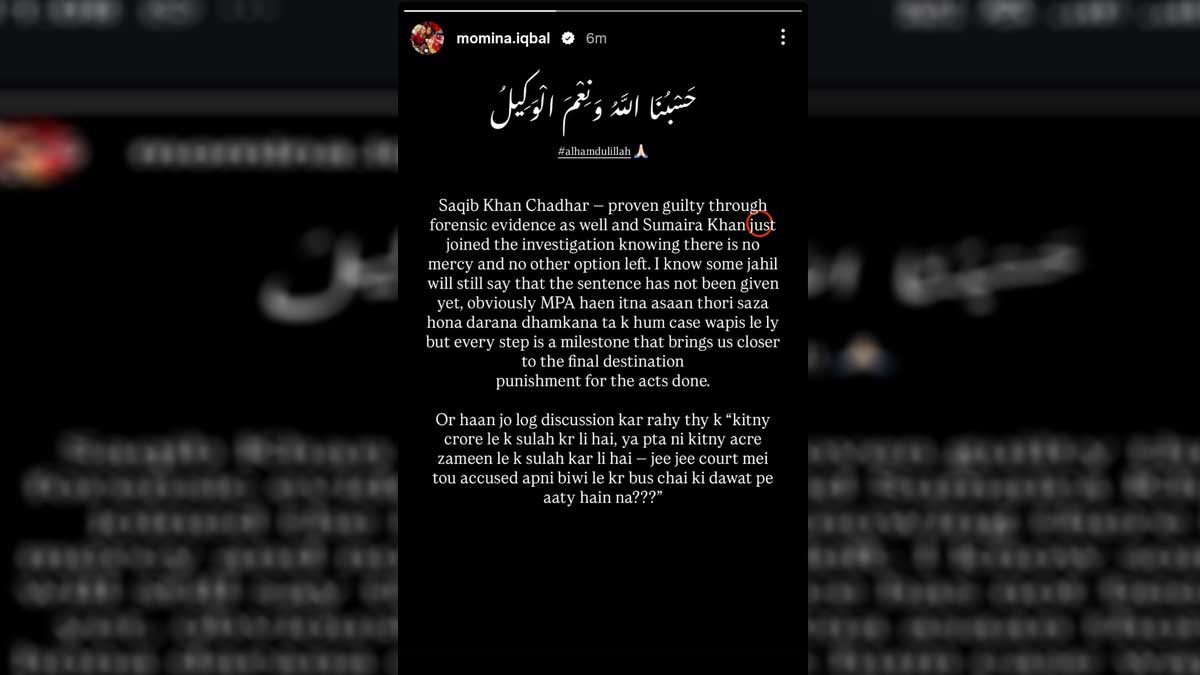
The actor also responded to discussions regarding a possible settlement, questioning claims that any agreement had been reached and emphasizing that the matter was being pursued through legal proceedings.
The case remains under judicial proceedings, and the final outcome will be determined after completion of the legal process.


 English (US) ·