
.png)
 23 hours ago
1
23 hours ago
1
ARTICLE AD BOX
UNESCO terms competition of northern section conservation landmark
LAHORE:
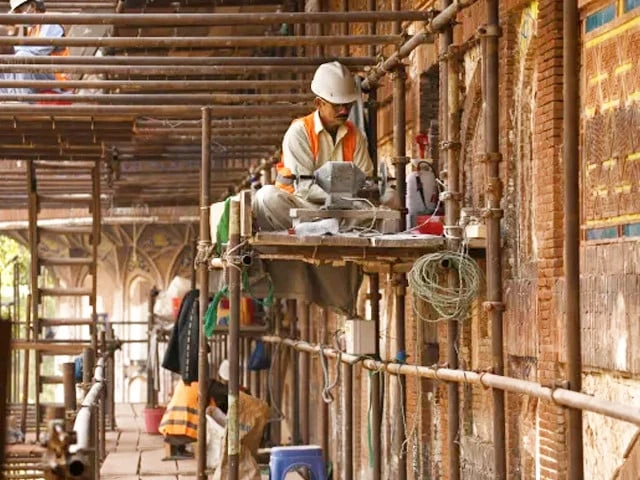
The United Nations Educational, Scientific and Cultural Organisation (UNESCO) has described the completion of the conservation of the northern section of the historic Picture Wall at Lahore Fort as a landmark in Pakistan's cultural heritage preservation efforts. In a statement issued after the completion of the project, UNESCO termed the initiative "one of the most ambitious heritage conservation endeavours in the country's history". The Picture Wall, constructed during the reigns of Mughal emperors Jahangir and Shah Jahan in the 17th century, stretches nearly half a kilometre and is considered one of the world's largest mural walls. It contains around 2,000 decorative panels featuring floral patterns, animals, hunting scenes, royal processions, geometric motifs and mythological figures inspired by Indo-Persian folklore. The artwork includes traditional Mughal techniques such as glazed tile mosaic Kashikari, fresco painting, marble and red sandstone lattice work, and terracotta relief. The conservation project was implemented through collaboration between the Aga Khan Cultural Service – Pakistan (AKCS-P), Walled City of Lahore Authority (WCLA), and international donors, including the United States, Germany and Norway. The Punjab government provided institutional support through the WCLA, while AKCS-P carried out the onsite conservation work. UNESCO Representative in Pakistan Fuad Pashayev said the completion of the project demonstrated what could be achieved through scientific expertise, local knowledge and international cooperation. He said the work had strengthened the universal value of Lahore Fort as a UNESCO World Heritage Site. The project was initiated in 2015, while conservation work began in 2018 and was completed in April. Before restoration, the wall had suffered structural cracks, moisture damage, fungal growth, surface deterioration and missing sections caused by decades of environmental exposure and inadequate drainage systems. Conservation experts focused on preserving the original structure and historical authenticity of the wall instead of redesigning it. The process included removing later-added plaster, cleaning biological growth, restoring frescoes and tile work, and reinforcing damaged sections. Advanced technologies including 3D laser scanning, electronic distance measurement devices and high-resolution photography were used for documentation and scientific analysis.






 English (US) ·