
.png)
 12 hours ago
1
12 hours ago
1
ARTICLE AD BOX
Industry warns 7.5% duty cut to 5% could derail refinery upgrade investments
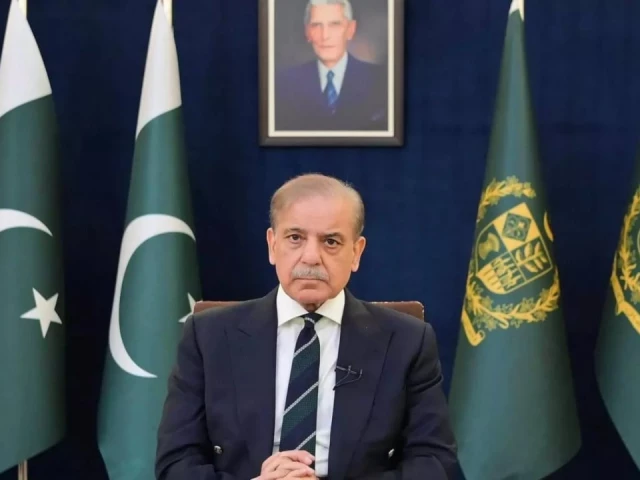
PM Shehbaz Sharif set a committee to review Telecommunication Reorganization (Amendment) Bill. PHOTO: APP
ISLAMABAD:
Prime Minister Shehbaz Sharif is expected to remove long-standing bottlenecks in the Brownfield Refinery Policy as the Cabinet Committee on Energy (CCoE) meets on Tuesday to consider amendments that could determine the fate of billions of dollars in refinery upgrade investments. According to official documents, the CCoE will consider amendments to the Pakistan Oil Refining Policy for Upgradation of Existing (Brownfield) Refineries, 2023, following consultations with stakeholders, including the Oil and Gas Regulatory Authority (OGRA), the finance division and the petroleum industry. However, the proposed amendments have sparked concern within the refining sector over a plan to retrospectively reduce deemed duty protection from 7.5% to 5%, effectively penalising refineries for delays that, according to industry representatives, were caused by the government itself. Sources said the proposed reduction is based on the government’s position that refineries failed to sign Upgrade Agreements within the stipulated timeframe. Refinery officials reject that claim, arguing that all companies had accepted the draft Upgrade Agreement in 2024 and were merely awaiting the government’s call for a formal signing ceremony at the Prime Minister’s House. “The agreements were never delayed because of the refineries,” a senior industry official said. “The industry completed its part of the process and repeatedly requested the Petroleum Division, OGRA and other government forums to execute the agreements.” According to industry officials, refineries consistently pleaded their case before the Petroleum Division, OGRA and other stakeholders, maintaining that administrative delays on the government’s side prevented execution of the agreements. They argue it would be unjustified to retrospectively reduce incentives on the basis of delays for which the industry was not responsible. The dispute centres on deemed duty protection, a key component of the refinery upgrade incentive package designed to support billions of dollars in investment for producing Euro-V compliant fuels, reducing furnace oil output and improving the country’s fuel mix. Industry representatives argue that a 7.5% tariff protection mechanism has remained in place for more than two decades, making the proposed reduction to 5% both unprecedented and unfair, particularly when the delay was beyond the refineries’ control. The controversy comes after the Finance Act 2024 shifted major petroleum products from the zero-rated to the exempt sales tax regime, depriving refineries of input tax adjustment and substantially increasing unrecoverable sales tax costs. The Petroleum Division has acknowledged that the tax changes adversely affected the economics of refinery upgrades and delayed implementation of the policy. Officials said the prime minister is expected to address all outstanding issues that have delayed implementation of the Brownfield Refinery Policy since its approval in August 2023, with the industry hoping the original incentive framework will remain intact. The Petroleum Division has proposed limited amendments to operationalise the policy while preserving its original objectives. It has also recommended constituting a committee comprising the Secretary Petroleum, Secretary Law, the OGRA chairman and a representative of the Special Investment Facilitation Council (SIFC) to finalise the Upgrade Agreement template. However, regulatory sources told The Express Tribune that OGRA has serious reservations about remaining a signatory to the Upgrade Agreements. OGRA Chairman Masroor Khan has repeatedly raised the issue, arguing that the regulator’s role should be confined to regulation rather than becoming a contractual party to commercial agreements. The refining industry is hoping the CCoE will remove the remaining policy hurdles without retrospectively altering the agreed incentive framework, arguing that policy consistency is critical to unlocking long-awaited investments in refinery modernisation and strengthening Pakistan’s energy security.





 English (US) ·