
.png)
 10 hours ago
1
10 hours ago
1
ARTICLE AD BOX
UNITED NATIONS, (APP - UrduPoint / Pakistan Point News - 14th Jul, 2026) The UN Security Council held an emergency meeting on Monday following reports of unauthorized Iranian flights to and from Yemen in recent days, with Pakistan calling for de-escalation to foster peace, stability and mutual understanding in the region.
"Any further escalation risks undermining prospects for peace and deepening the suffering of civilians," Ambassador Usman Jadoon, deputy permanent representative of Pakistan told the UN.
The meeting was convened by Yemen's Government alleging that the Houthis, with Iranian support, had violated Security Council resolutions. Bahrain, France, the United Kingdom and the United States supported the request.
It came after an Iranian aircraft flew from Tehran to Sanaa International Airport, which is controlled by the Houthis, on July 3 and then returned home, reportedly transporting Houthi officials to attend the funeral of Iran’s former supreme leader, Ali Khamenei. Yemen’s Aden-based internationally recognized government protested against the flight as a violation of its sovereignty and airspace.
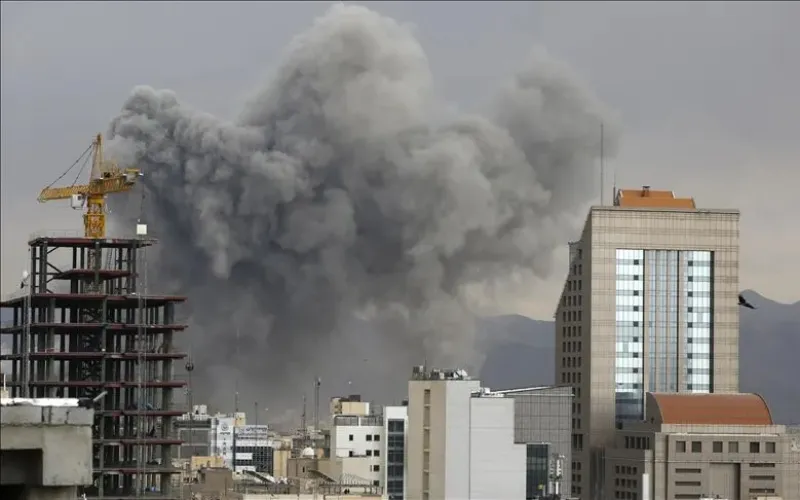
On Monday, another Iranian flight carrying a Houthi delegation landed at Hodeidah Airport, hours after airstrikes reportedly hit the runway at Sanaa International Airport. According to Yemen’s government, the strikes were intended to prevent the Iranian aircraft from landing.
The Houthis declared an end to their “deescalation phase” with Riyadh and launched ballistic missiles at the Kingdom, which were reportedly intercepted.
In his remarks, Ambassador Jadoon said that Pakistan strongly condemns the Houthi ballistic missile attacks against Saudi Arabia, and expressed solidarity with the "brotherly" country and reaffirmed support for its security, sovereignty, and territorial integrity.
"We also reaffirm our unwavering commitment to the sovereignty, independence, unity and territorial integrity of Yemen, consistent with the purposes and principles of the UN Charter and international law."
At a time when the region continues to face heightened tensions and multiple interconnected crises, Ambassador Jadoon said Pakistan call on the concerned parties to "resolve differences through dialogue, diplomacy and a steadfast commitment to de-escalation.
<?php /*?> <?php */?>"
“A comprehensive, inclusive and sustainable peace can only be achieved through a Yemeni-owned, Yemeni-led, political process, facilitated by the UN,” the Pakistani envoy said.
"The Yemeni people have endured years of conflict, displacement, economic hardship, food insecurity and the collapse of essential services. Any further escalation risks undermining prospects for peace and deepening the suffering of civilians," he said.
"We encourage all concerned parties to maintain channels of communication, avoid actions that could heighten tensions and pursue peaceful resolution of disputes in accordance with the UN Charter and international law."
Briefing the Council, the UN Assistant Secretary-General for the middle East, Khaled Khiari, said these developments underscored the fact that “there is no alternative to an inclusive, Yemeni-owned political process” in the country. Unilateral measures, he warned, “will not bring Yemen closer to peace” but risk entrenching divisions and fragmentation.
On his part, Yemen' Ambassador Abdullah Ali Fadhel Al-Saadi said recent events in his country constitute “a real test” of the principles on which the international system is founded - most notably, respect for sovereignty and non-interference.
He said Yemen had requested today’s meeting, as the recent unauthorized flight constitutes an "extremely dangerous precedent", raising the question of whether the Council is able to protect the rules of the international system.
“We are dealing here with a deliberate attempt to impose a fait accompli," he warned.
He denounced these actions, which bypass Yemen's legitimate Government, defy Council resolutions, test the international sanctions regime and turn civil aviation into a "tool to achieve military and political objectives" that are inconsistent with international law.
APP/ift





 English (US) ·