
.png)
 1 day ago
2
1 day ago
2
ARTICLE AD BOX
PM warns widening conflict risks broader regional war
ISLAMABAD:
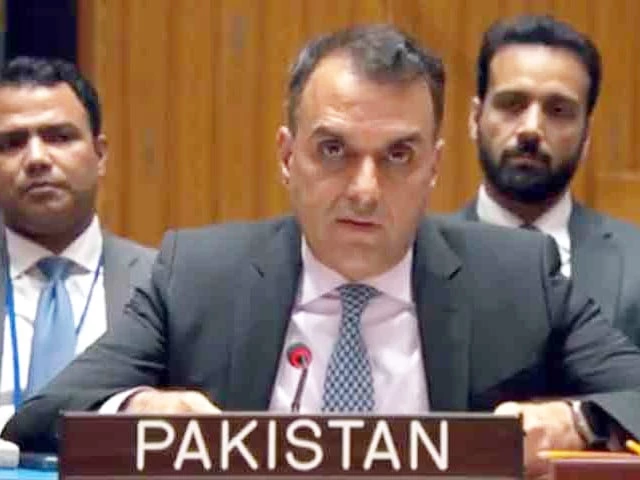
Pakistan on Tuesday strongly condemned the latest missile and drone strikes on Saudi Arabia while renewing its call for diplomacy, warning that the widening conflict risks engulfing the Middle East in a broader regional war. In a statement, Prime Minister Shehbaz Sharif said that Pakistan "strongly condemns the blatant attacks carried out against the brotherly Kingdom of Saudi Arabia last night," adding: "Such reprehensible actions constitute a violation of the sovereignty and territorial integrity of the Kingdom of Saudi Arabia and have the potential to further undermine regional peace and stability." The prime minister reaffirmed that Pakistan's "unwavering support" for Saudi Arabia's security and reiterated that Islamabad firmly stood "in complete solidarity with the brotherly Kingdom of Saudi Arabia at this critical time." "On its part, Pakistan will continue to support all sincere efforts aimed at promoting peace, stability, security, and mutual understanding across the region," the statement added, underscoring Islamabad's continued emphasis on dialogue despite the rapidly deteriorating security situation. The condemnation came after Yemen's Houthis launched attacks against Saudi Arabia, saying the strikes were in retaliation for the bombing of Sanaa International Airport. The escalation has opened a new front in the already volatile confrontation between the United States and Iran, raising fears that a conflict previously centred on the Gulf could spill across the wider region. The Houthis, who control large parts of northern Yemen including the capital Sanaa, have long been aligned with Iran, although Tehran denies exercising direct command over the group. Saudi Arabia, which led a military coalition against the Houthis for years after they seized the Yemeni capital in 2014, has only recently managed to reduce cross-border hostilities through a fragile truce and indirect negotiations. The renewed exchange of attacks threatens to reverse those gains. More importantly, it complicates efforts to contain the broader US-Iran confrontation by drawing Saudi Arabia back into active hostilities. Analysts warn that the reopening of the Yemen front increases the risk of multiple, interconnected conflicts stretching from the Gulf to the Red Sea, making diplomatic de-escalation considerably more difficult. For Pakistan, the developments carry particular significance because of its longstanding strategic partnership with Saudi Arabia. The two countries maintain close defence ties under a bilateral security framework that includes military cooperation, training and commitments to support the Kingdom's security. While the precise contours of those arrangements remain confidential, any sustained attack on Saudi Arabia would inevitably place Islamabad under growing pressure to demonstrate tangible support for its closest Gulf ally. Pakistani officials, however, have consistently maintained that the country's priority remains preventing the conflict from expanding. Islamabad has intensified diplomatic contacts with regional capitals, urging restraint and encouraging negotiations to prevent a wider war. Officials say Pakistan believes that further military escalation would not only endanger regional stability but could also force countries with longstanding security partnerships into increasingly difficult strategic choices. That concern explains Islamabad's continued push for mediation even as it expresses unequivocal solidarity with Saudi Arabia. Pakistani policymakers fear that unless diplomacy regains momentum quickly, an expanding conflict could draw additional regional actors into direct confrontation, transforming an already dangerous crisis into a much wider Middle East war with far-reaching global consequences.



 English (US) ·