
.png)
 1 hour ago
5
1 hour ago
5
ARTICLE AD BOX
Tehran is red and black when I arrive. Millions of people in black mourning attire carried red flags, the stark emblem of blood and martyrdom, seeking revenge for their leader, Ayatollah Ali Khamenei, who was assassinated on February 28. “We Must Rise,” declare the banners. War songs ricochet off the walls in streets punctuated by elegies on the martyrdom of Imam Husayn and his Companions at Karbala. This is collective grief channelled as state resilience. An elderly supporter I meet, Akbar Ali Jafari, puts it like this: “The war has given the Revolution a new lease on life.” The founding purpose is resurrected and its leadership cast as embattled defenders of the nation rather than an ageing, contested regime.
In early July, a towering fist was constructed a few days before the funeral proceedings of the slain leader. The Islamic Revolutionary Guard Corps (IRGC) chose Revolution Square as the spot to assert that the Islamic Republic stood undefeated. What unfolded during the funeral proceedings was a grand spectacle of unity and continuity orchestrated as much for domestic consolidation as for Western consumption.
The national mood changes
The day after the state funeral in July, the scene changed. Art galleries around Enghelab Square reopened, women in t-shirts and jeans sketched with their heads uncovered. In the affluent Tajrish or centuries-old Grand Bazaar, boys and girls sped by on motorbikes or hung around vaping. In Pasdaran, cafes filled with couples holding hands or groups of youngsters talking over each other loudly.
I thought of what Mr Jafari had told me earlier, that the Islamic Republic wants to bring the younger generation into its fold. And indeed, I was looking at the evidence in the public sphere. Restrictions on dress codes appeared to have been further relaxed along with those that regulated music and mixed gatherings outdoors. This was a different Iran from the one just four years ago, managed by a morality police or Gasht-e-Ershad Guidance Patrol force set up during the Ahmadinejad presidency in 2005 to guard the nation’s chastity. But the force was suspended after Mahsa Amini’s death in custody was met with nationwide protests in 2022. Women ripped off their headscarves as they rallied to the cry, “Women, Life, Freedom” in the face of a crackdown. “Those were horrible days,” recalls 24-year-old activist Maryam Rezaei, who works as a manager at a private business. “We used encrypted WhatsApp and Telegram messages to coordinate protests. My friends were detained by the notorious Guidance Patrol and sent to re-education centres. Now there are no white vans with dark green stripes chasing you in public places.”
Anti- and pro-government
Iranians have a profound connection to their culture and see Iran as a civilizational state, rooted in thousands of years of history. Its complex layers include the Shia Islamic identity, which merges with Persian heritage as opposed to supplanting it. Pre-Islamic heritage is preserved through festivals such as Nowruz, the Iranian New Year, celebrated to welcome spring, along with the winter solstice or Yalda Night and the fire festival Chaharshanbeh Suri. Ferdowsi, the legendary 11th-century poet’s work, Shahnameh, Republicis regarded as a cornerstone of nationhood. So embedded is this pride that the clergy, despite its ideological leanings, has learned to accommodate it and even use it to strengthen nationalist sentiment. The US-Israel war on Iran strengthened the expression of this identity.
I speak to Mohammad Mehdi, a young man who runs a handicraft shop with his brother, to gain a sense of the mood. He and his friends heard Trump declare that their civilization should be “erased” and watched America and Israel bomb centuries-old monuments in his hometown of Isfahan, known as Nesf-e-Jahan or ‘Half the World’ for its art, culture, and beauty. And so when there were threats to blow up bridges and power grids, Mehdi and his friends would go to symbolically defend them. “Iran isn’t Venezuela,” he asserts. “We will fight back if they attack us again. We will defeat them first, and then we can fight our internal battles.“
Women like Maryam and her friend Fatemeh Ahmadi are the digitally native generation which powered anti-regime demonstrations earlier this year. In a paradoxical realignment, however, they are the very same demographic that has now rallied around the state and flag since the US-Israel war on Iran broke out. “How could we support the invading forces?” says Fatemeh. “We are a proud nation, and we back the Islamic Republic for standing firm against the aggression of the US and Israel.” These young Iranians see the government as safeguarding their history and civilisation and are responding to calls for national solidarity, survival instinct, and civilizational pride.
Social media was flooded with young people taking pride in Iran’s resilience and defiance in the face of war, with the ‘Lego videos’ by Explosive Media going viral. Faced with an existential external threat, the anger of ‘People vs the Regime’ was supplanted by the hostility of ‘the Aggressor vs Iran’.
People management
In the backdrop of the war, the softening of social strictures could be a sign of strategic recalibration. How will the government manage the youth, who have demonstrated nationalist loyalty during war, but whose social and cultural values are fundamentally at odds with the theocratic system? At a roadside cafe, this is being discussed by history buff Ali Reza, who is not sure whether the pattern has staying power. “It’s too early to predict whether this change is temporary or will get entrenched,” he says. “They might allow young people to dress with more freedom, listen to their music, and mingle in public, as long as they do not organise politically.” Such a strategy would, in effect, separate lifestyle freedom from political freedom and trade the visibility of social control for the stability of political control.
But people close to official circles point out unspoken fears about infiltration, spurred further by US attempts at fomenting uprisings in the wake of the attacks. It is conceivable, though speculative, that the government will relax moral codes for public spaces, but ramp up digital and physical surveillance to detect dissent and espionage.
Beyond the question of lifestyle freedoms lies a deeper dividing line between the revolutionary guards and the clergy who emerged together from the 1979 revolution. The clergy provided ideological direction and the guards the muscle. By the eve of this war, however, the Revolutionary Guards had consolidated its role as the regime’s economic, military, security and regional backbone. The clergy, by contrast, was confronted with its waning authority as it lost ground to the youth in the culture wars.
Shielding the people from the US attacks has made the IRGC the guarantor of national survival and repositioned it as the centre of gravity. It has experienced this ascendancy in the past during an earlier national security crisis. After the Iran-Iraq war, the force’s prestige, resources and autonomy massively expanded.
Historically, the IRGC has treated social control less as a doctrinal mission and more as an operational necessity, and any opposition as a security vulnerability. How the clergy responds to easing of social controls could be a potential point of friction. It may cause disquiet within the clerical establishment, between the pragmatists who accept the relaxation as a safety valve, and the conservatives who may see it as a surrender and doctrinal retreat. If the internal distribution of political capital and power changes in the post-war period, the IRGC will hold the decisive veto.
Follow the money
Young people point out, however, that lifestyle freedoms are not their only or greatest concern. Social change alone cannot placate any demographic group in Iran, including the 60per cent youth, because the economy eclipses it.
“Life isn’t easy, with soaring inflation strangling low-income families,” says Fatemeh. “Even the middle class is feeling the heat. With an uncertain future, some even feel they cannot breathe freely.”
Many young Iranians say the economy is hollowing the country out. Inflation hovers at 80pc, the highest since World War II, and unemployment is a palpable fear. They highlight the need to find an exit from global isolation and sanctions.
“No family can survive on a single person’s earnings. My father works as a transporter. I study but work part-time, my sister also earns, only then we can afford a living in Tehran,” says 21-year-old Ali Vahidi, an engineering student. “Daily life is so tough, how then do I dream of a future?”
The hardline Revolutionary Guards, however, seem to believe time is on their side. They appear convinced that a prolonged war with “untrustworthy enemies” could yield further geo-strategic advantages: weakening the US security umbrella in the Gulf, providing a safety valve for allies such as the Houthis in Yemen and Hezbollah in Lebanon, and cementing Iran’s emergence as a regional power.
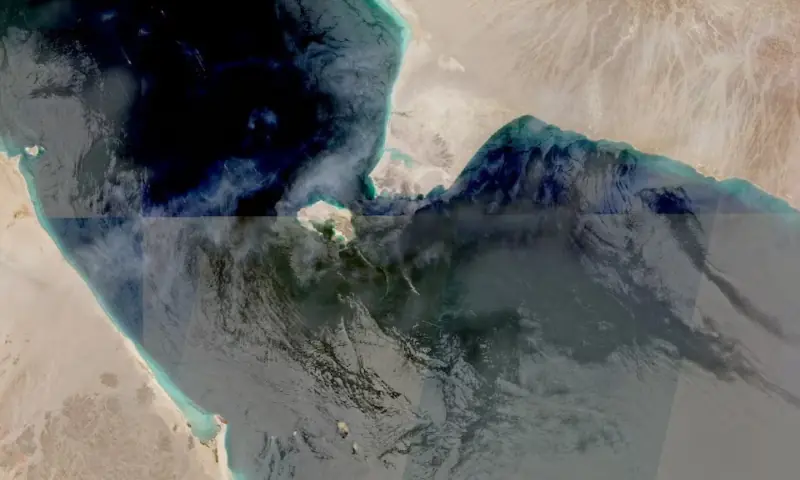
They believe Iran as ‘victorious’ and control of the Strait of Hormuz can provide them a renewed economic lifeline. The narrow sea passage, which controls one-fifth of global oil and energy supplies, is a double-edged sword; if it strangles the world economy, then it will have rebound effects on Iran’s economy as well.
After a week in the city, as I head back to Tehran’s Imam Khomeini Airport, the changing images of Iran’s history are assembled into a photomosaic-in-process, where the dominant is still not clear. The seeds of a new social contract may have been planted, but the terms are still being written.




 English (US) ·