
.png)
 15 hours ago
2
15 hours ago
2
ARTICLE AD BOX
ECC approves Rs98b subsidy to give another push to country's exports
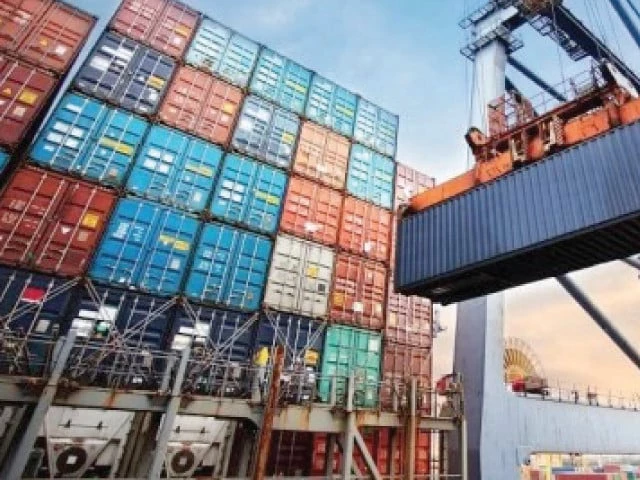
There are apprehensions that some exporters keep part of their proceeds overseas by understating the value of their goods or bringing some as exports of services to avoid income tax, according to sources. photo:file
ISLAMABAD:
The government on Monday approved a subsidy of Rs98 billion to provide highly cheaper loans to exporters, including 10-year loans at a fixed 5% rate, to give yet another push to exports that fell 6% in the last fiscal year despite numerous incentives. The total estimated subsidy impact of such export schemes over 10 years at the existing interest rates is Rs270 billion. The government last month withdrew a subsidy of Rs76 billion given to pick the transfer cost of foreign remittances, underscoring its preference to promote exports over remittances. Exports remained $11.5 billion less than remittances in the last fiscal year. The Economic Coordination Committee (ECC) also approved a grant of Rs4 billion to pay the litigation cost of various suits filed by the independent power producers (IPPs) in international arbitration courts, including a $2 billion claim by Saudi and Kuwaiti investors for blocking the divestment of K-Electric shares. Headed by Finance Minister Muhammad Aurangzeb, the ECC approved three schemes for exporters, recommended by the central bank for financial year 2026-27 and onwards. For the current fiscal year, the ECC approved a subsidy of Rs98 billion for picking interest cost up to 11.5%. It approved enhancement in the Exim-administered Export Finance Scheme (E-EFS), the launch of a new Long-Term Export Growth Financing Facility (LTEGFF) and the Performance-based Rebate on Incremental Exports. A finance ministry statement said that the ECC approved three dedicated schemes for export enhancement. The chairman directed that a six-month performance report be presented to assess the outcome of those schemes. Under the E-EFS, the government will provide working capital loans to exporters for six months at a rate of 8.5%. It will pick 5% interest cost, which will require a subsidy of Rs58 billion in the current fiscal year. However, some of the ECC members recommended capping the maximum working capital limit aimed at diversifying cheaper loans. They also opposed the linking of incentives with non-traditional exports. The ECC approved an increase in the existing portfolio from Rs1 trillion to Rs1.5 trillion for the short-term scheme. It agreed on the launch of LTEGFF, which would offer loans at a low interest of 2% for two years and a fixed 5% rate for the next eight years. The new scheme is aimed at providing long-term financing for the establishment of new export-oriented projects or the Balancing, Modernisation and Replacement (BMR) of existing projects. Loans of Rs350 billion are projected to be given, which will require Rs196 billion in subsidies due to the decision to pick up to 11.5% interest cost. The existing Exim-administered Long-Term Financing Facility (E-LTFF) with variable interest rates does not attract much interest from the business community largely due to the interest rate risk, according to the finance ministry. The ECC approved the provision of long-term loans at a 2% rate for two years and then at a fixed 5% rate for the next eight years. For this fiscal year, the subsidy cost is estimated at Rs25 billion for covering 11.5% interest cost. The ECC approved a new performance-based rebate scheme for incremental exports. This scheme is being introduced from July 1, 2026, with an estimated annual cost of Rs15 billion. Exporters achieving annual export growth of up to 10% over the preceding year shall be eligible for a rebate equivalent to 1% of the incremental export value. And the exporters achieving annual growth of more than 10% shall be eligible for a rebate equivalent to 2% of the incremental export value. Court cases The ECC approved the release of Rs4 billion for paying legal fees to fight the claims filed by the IPPs. The statement said that a supplementary grant was approved to meet the expenses related to multiple international arbitration proceedings initiated by the IPP developers and major utility shareholders. The Power Division had sought Rs4.2 billion to clear the dues against past claims. The ECC was informed that due to no budget allocation, the claims were pending. One of the cases was filed by Saudi and Kuwaiti investors for alleged breach of the OIC Investment Agreement. The arbitration proceedings have been initiated under Article 17 of the multilateral investor state treaty, the Agreement on Promotion, Protection and Guarantee of Investments amongst Member States of the Organisation for Islamic Conference. Investors have claimed $2 billion in damages from Pakistan for blocking the sale of KE's majority shares to Shanghai Electric Power Company. Gas supply The ECC approved a summary submitted by the Petroleum Division for tariff fixation for the indigenous gas supply to RLNG-based power plants on the SNGPL network during April, May and June 2026. It agreed on charging Rs2,000 per mmBtu for the locally diverted gas for power plants but called for recovering the full cost of imported gas. This will result in an electricity price hike of nearly Re1 per unit through the monthly fuel cost adjustment. All RLNG consumers including the new domestic consumers, power plants, the industry, CNG stations, commercial and cement plants are charged a monthly notified RLNG price by Ogra. During the period of unavailability of RLNG due to the Middle East conflict, the National Coordination and Management Council decided to supply indigenous gas to RLNG power plants during April, May and June 2026. The Power Division highlighted that if the notified RLNG tariff for the supply of indigenous gas was charged, the power plants would have to file for an upward revision in the fuel cost adjustment in the range of Rs0.5 to Re1 per unit.







 English (US) ·