
.png)
 3 months ago
56
3 months ago
56
ARTICLE AD BOX
Govt proposes LNG savings, dividends and fuel levy to clear Rs1.5tr circular debt
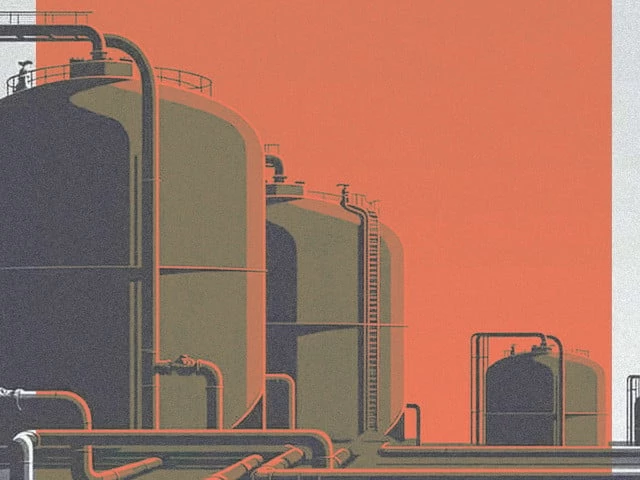
Gas debt. Design: Mohsin Alam
ISLAMABAD:
Pakistan has sought the International Monetary Fund (IMF)'s consent to retire Rs1.5 trillion worth of gas sector circular debt within three years by using income proceeds of major public sector gas companies, nearly Rs400 billion LNG savings and funds collected from users of petroleum products. The plan was discussed in depth during the recently inconclusive talks under the third review of the $7 billion bailout package. The IMF has not yet given its final word on the status of the plan, according to sources. The government is aiming to secure the IMF's nod before June so that it can make provisions in the next budget to retire one-third of the total principal debt, said the sources. Initial discussions suggested that the Fund may allow settling the Rs1.5 trillion circular debt, subject to addressing some of its primary concerns, according to government officials. The payments of the Rs1.5 trillion dues to oil and gas sector companies would be conditioned upon their prior consent to waive over Rs1.6 trillion in late payment surcharges that have accumulated due to non-payment of the principal amount, said the sources. The total gas sector circular debt has jumped to over Rs3.4 trillion, including Rs1.8 trillion in principal amounts, said officials. However, the government plans to settle about Rs1.5 trillion, as the remaining amount is stuck in tax refunds and court cases, the sources added. The Express Tribune had reported in December that the government was planning to retire Rs1.8 trillion circular debt over a period of five to six years. However, it has now reduced the settlement period to three years, subject to the final nod by the IMF. Sources said the government has proposed to pay off the dues arising from gas price differentials. They added that the IMF has also acknowledged that it is the responsibility of the federal government to clear these dues. The sources said one of the IMF's major objections was that instead of using close to Rs400 billion savings from LNG diversions for retiring circular debt, the money could be utilised to reduce the cost of energy. The sources said the government has proposed charging a Rs5 per litre levy on petrol and diesel to settle the gas sector circular debt. The indirect subsidy has already punished consumers, as the government has resorted to increasing costs for electricity and petroleum products to meet its social obligations. The sources said the government has already built over Rs4 per litre subsidy into the current petrol price and about Rs1 per litre into diesel for the same purpose. During a recent meeting, Deputy Prime Minister Ishaq Dar asked the finance ministry to set aside the money already collected through an additional levy on every litre of petrol and diesel since January. The monthly collection under this head is Rs12 billion, but the finance ministry is reluctant to make these special allocations, said the sources. There is also a plan to generate Rs850 billion through dividends and additional dividends from Oil and Gas Development Company, Pakistan Petroleum Limited and Government Holding Private Limited. The government is also planning to obtain less than Rs400 billion from LNG savings for the same purpose. As per the plan, exploration and production companies would declare regular and additional dividends, and the government would settle the dues of its Sui companies. Sources said the IMF had apprehensions that extracting Rs850 billion from these companies could compromise their financial health and future investment plans. However, the Petroleum Division was of the view that this would be a temporary settlement mechanism. Pakistani authorities argued that settlement of the circular debt would also benefit oil and gas exploration companies. They said that due to new regulations, these firms may have to make provisions against these chronic receivables. The IMF also asked about the implications of extracting dividends for the minority shareholders of these companies. Pakistan had surplus LNG contracts, which it recently renegotiated with Qatar due to suppressed local economic activity and the Power Division's inability to lift contracted cargoes because of low electricity demand from the national grid. Qatar, the main supplier of LNG to Pakistan, recently declared force majeure due to Iranian attacks on its energy facilities. This has enabled the government to revive 400mmcfd local gas production, said Ali Pervaiz Malik, the Federal Minister for Petroleum. Gas prices have been increased substantially in recent years, including the imposition of fixed charges and providing new gas connections to residential consumers at imported LNG prices instead of the average price of local and imported gas. The government also assured the IMF that it would continue revising gas prices during July and February each year to prevent further accumulation of circular debt.




 English (US) ·