
.png)
 3 hours ago
3
3 hours ago
3
ARTICLE AD BOX
Growing up with a chronically ill mother in a remote village in India, Rema Begum aspired to become a doctor until her dream was cut short by her own tragic death.
After years of studying and costly coaching classes, the 20-year-old believed she had finally done enough to win a coveted seat at a government medical school.
Then came news that the question paper of the medical entrance examination she sat for had been leaked, and a retest was ordered.
Days later, Begum was dead.
She was among at least 20 students who reportedly took their own lives after the incident, according to local media and activists.
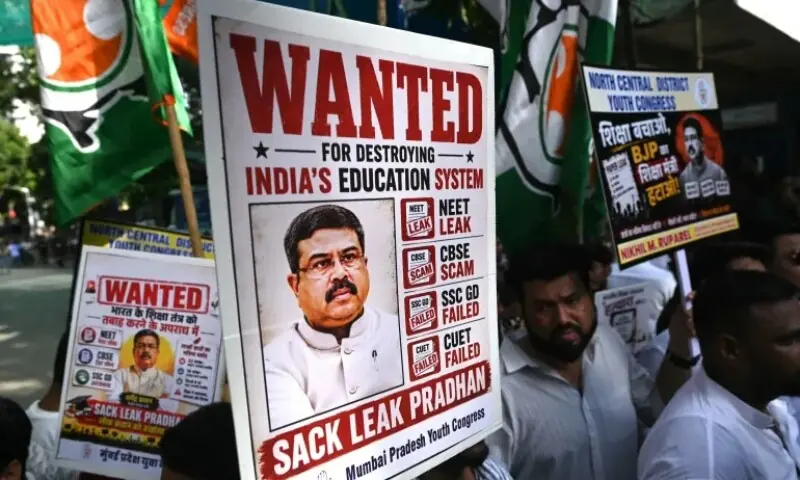
The exam paper leak, alongside a string of other irregularities, has fuelled nationwide protests and public anger over an education system many students say is stacked against them.
A month after her death, Begum’s father Rajaul Islam is still struggling to understand how his “gem” of a daughter lost hope.
But he believes the retest announcement changed everything.
“After the exam, she was absolutely confident that she would clear it,” Islam told AFP by phone from the family’s village in the northeastern state of Assam.
“But after a retest was announced because the paper had leaked, she became a different person and withdrew into a shell.”
Nothing the family said could reassure her, he said.
Islam, a fish trader, had spent heavily on his daughter’s preparation, sending her to coaching centres in larger cities for two years.
“I had spent a lot of money on her studies, so she was worried it would all go to waste,” he said.
‘Happy life’
Days before the new exam date, Begum was found dead.
Her death highlights the immense pressures on students in India, where admission to a government-run medical college remains one of the most sought after pathways to economic security.
Despite rapid growth in the world’s most populous country, millions of young people still face a shortage of well-paying jobs and fierce competition for professional careers.
“Getting through the NEET examination therefore means, for many families, the assurance of a happy and comfortable life,” said literary scholar and former professor G.N. Devy, referring to the National Eligibility cum Entrance Test (NEET).
“But the number of students who want these places is completely out of proportion to the number of institutions available.”
More than two million candidates sat the exam this year, competing for roughly 137,000 medical seats nationwide.
The odds have fuelled a sprawling coaching industry where students spend years preparing, often at enormous sacrifice for their families.
In Rajasthan, farmer Rajesh Kumar sold ancestral land and borrowed 1.1m rupees ($11,400) so his son Pradeep Meena could attend coaching classes for three years.
“I toiled for up to 16 hours a day on the farm so that he could take coaching classes,” Kumar told AFP.
“Because I thought if he becomes a doctor it would all be worth it, and I could lead a comfortable life in my old age.”
After the exam, Meena appeared certain he had succeeded.
Kumar recalled his son hugging him and saying that “even God cannot stop me from becoming a doctor now”.
A day after authorities announced the retest, the 22-year-old died by suicide.
‘Betrayed’
In Uttar Pradesh, another family suffered a similar loss after the death of their 21-year-old son Ritik Mishra.
“It was his third attempt, and he said he had done well this time,” said his father, Anup Kumar Mishra, referring to the exam.
His son took his own life a day after news of the exam leak surfaced.
For students who eventually retook the test, the experience was draining.
“It is very demoralising mentally,” said 19-year-old Chaitanya Aggarwal. “You give your best and then you are forced to take it again.”
Teachers say the emotional toll should not be underestimated.
“It’s a highly stressful experience to prepare for and take the exam, and having to do it all over again is not easy,” said Abhijit Patra, a teacher at a coaching centre in the eastern city of Kolkata.
“Paper leaks make an already hectic experience even worse.”
For many families, the scandal felt like a “betrayal” after years of sacrifice, said Devy, the former professor.
Preparing for entrance examinations was often financially ruinous and socially exhausting, he said, particularly for lower-income households unable to afford costly private universities or education abroad.
“They begin this journey of preparation with hope, so when they discover the paper has leaked or been sold, they feel betrayed,” Devy said.
Thousands of kilometres from the protest site in capital New Delhi, Begum’s family is still searching for answers.
“I request the government to take irregularities in examinations seriously,” her father said.
“They should understand that it is not easy for a child from a poor family to dream of a better life and work towards it.”



 English (US) ·