
.png)
 3 months ago
57
3 months ago
57
ARTICLE AD BOX
'Time Hoppers: The Silk Road' blends time travel and legacy of Muslim scientists
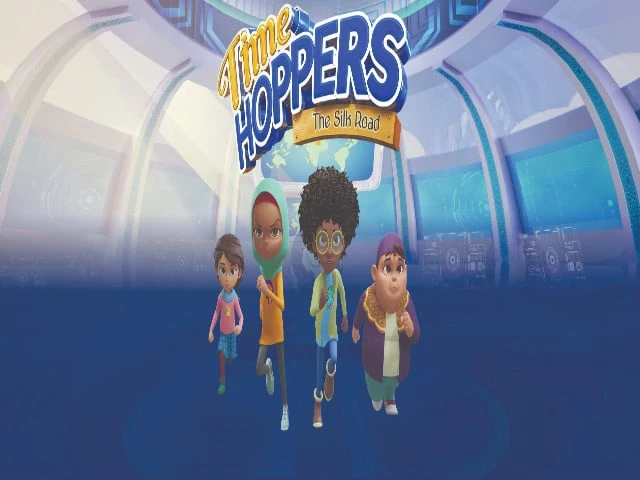
Time Hoppers
An independent animated film born from a modest online experiment has broken new ground in American cinema, with 'Time Hoppers: The Silk Road' emerging as the first theatrically released animated feature created by and primarily for the Muslim community, drawing notable early audience interest. The film, directed by Canadian filmmaker Flordeliza Dayrit and co-written with Sakina Fakhri, opened in early February across more than 660 cinemas in the United States, a scale rarely achieved by grassroots animation projects aimed at niche audiences. Produced by Milo Productions and distributed by Fathom Entertainment, the film sold more than 35,000 tickets in advance screenings, generating nearly $500,000 in pre-sales revenue and exceeding expectations for a one-day event built around entirely original characters. The story follows four students from the fictional Aqli Academy who discover a time-travel device and embark on a journey across the historic Silk Road, attempting to protect pioneering scientists from a villainous alchemist determined to sabotage the future. Their mission carries them through cities including Baghdad, Timbuktu, Cairo and Aleppo, where they encounter historical figures from the Islamic Golden Age such as mathematician Al-Khwarizmi, optics pioneer Ibn al-Haytham and astronomer Maryam al-Ijliyyah. Gabriel Milo, chief operating officer of Milo Productions, said the project grew from a simple idea sparked by a low-quality web animation released on Muslim Kids TV about six years ago, which unexpectedly generated strong interest among families. The concept was later developed into a mobile game supported by Canadian production grants, surpassing 100,000 downloads within months and convincing the filmmakers that an audience existed for stories centred on Muslim heritage and scientific achievements. "For the first time, Muslim children will be able to see themselves reflected on the big screen," Milo said. "That was something we saw was missing, and we saw a real market opportunity," Milo said. Rather than leaning on celebrity endorsements, the marketing campaign focused on community participation, recruiting educators, religious scholars and local volunteers to promote the film through grassroots networks that helped drive ticket sales across American cities. "This was a first," said Shannah Miller, vice president at distributor Fathom Entertainment. "The content was created by the Muslim community for the Muslim community, and it felt authentic, while still being accessible to a broader audience." Early audience reactions suggest the film's greatest impact may lie beyond box office numbers, as many parents welcomed the rare chance for children to see visibly Muslim characters portrayed as adventurous heroes exploring history, science and their own cultural identity.




 English (US) ·